
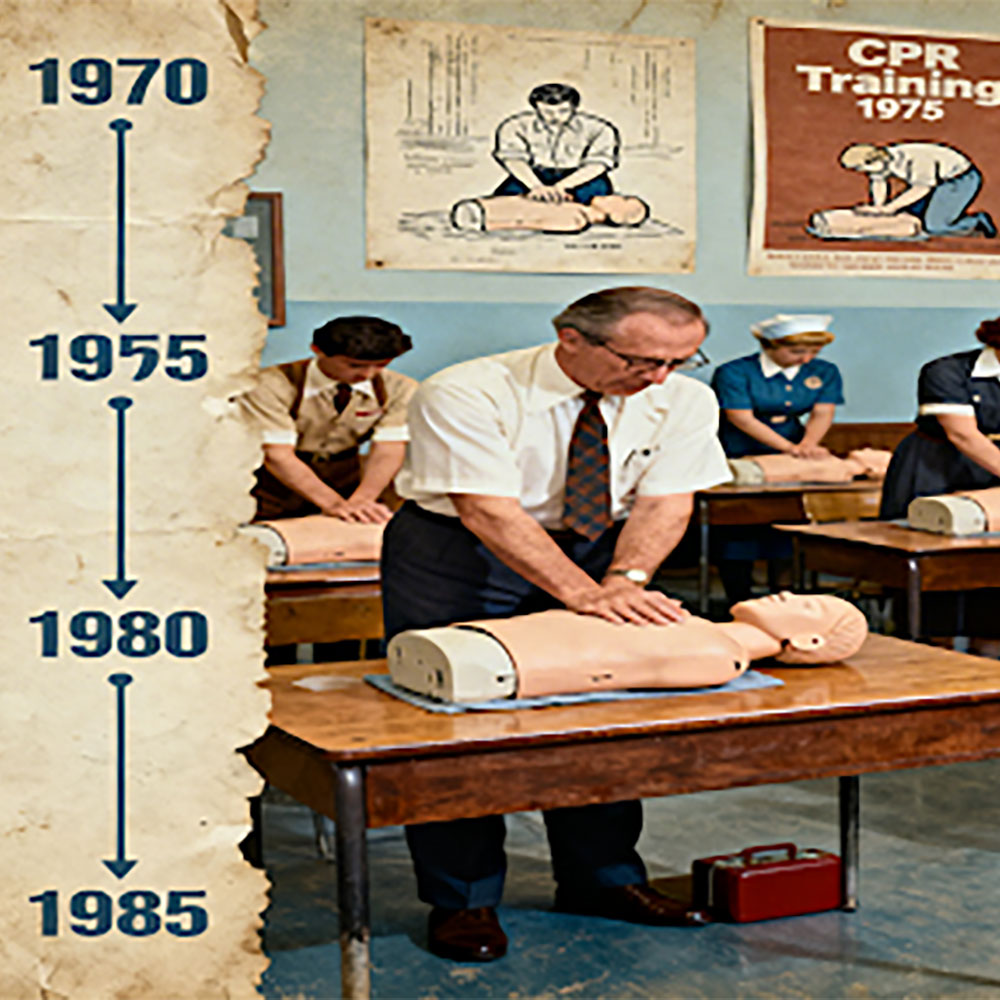
The Evolution of Cardiopulmonary Resuscitation (CPR) and First Aid Practices
The history of saving lives is a fascinating journey of trial, error, and scientific discovery. Today, we assume that a few rhythmic chest compressions can bring someone back from the brink of death, but the path to modern first aid CPR training took centuries of development. From Ancient Intuition to Early Methods
From Ancient Intuition to Early Methods
In the 18th century, “resuscitation” was more of a desperate attempt than a medical standard. Early techniques included everything from flagellation to shocking the body back to life) to using bellows, where blacksmith tools pumped air into a victim’s lungs. While these methods were well-meaning, they lacked a basic understanding of how the heart and lungs worked together
The Turning Point
The CPR we recognize today started to take shape in 1960. During this landmark year, doctors combined mouth-to-mouth resuscitation with closed-chest cardiac massage. This breakthrough simplified the process, allowing non-medical professionals to act during a cardiac arrest. Soon after, organizations began formalizing CPR training certification to ensure these skills were taught consistently around the world
The Shift to “Hands-Only” CPR
The Shift to “Hands-Only” CPR One of the most significant changes in first aid history happened in the early 2000s. Research revealed that for many bystanders, the “mouth-to-mouth” part was a barrier to taking action. This led to the rise of “Hands-Only CPR,” which focused on high-quality, continuous chest compressions. This change greatly increased the chances of bystanders helping during emergencies
Modern Training and Technology
Modern Training and Technology Today, the field is experiencing a digital transformation. In global business hubs, first aid CPR training in Dubai often uses high-fidelity manikins that provide real-time feedback on compression depth and rate. Additionally, the widespread availability of Automated External Defibrillators (AEDs) in malls, airports, and offices has turned complex medical procedures into life-saving tasks that anyone can perform after just a few hours of training.
Advancements in CPR Techniques
Over the years, CPR has evolved based on continuous research and medical advancements. Some key improvements include:
- Hands-only CPR: For untrained individuals, chest compressions alone can still save lives.
- Automated External Defibrillators (AEDs): These devices analyze heart rhythms and deliver shocks when needed, making emergency response more effective.
- Updated Guidelines: Organizations regularly update CPR techniques to reflect the latest scientific findings.
Today, first aid CPR training focuses on simplicity and accessibility, ensuring that even non-medical individuals can respond confidently in emergencies.
Why It Matters Today
The evolution of CPR is a testament to human ingenuity, but the tools are only effective if people know how to use them at the right time. Whether for workplace safety or personal preparedness, obtaining a CPR training certification is the final, very important link in this historical chain of survival.
Conclusion
The evolution of CPR and first aid practices shows humanity’s continuous effort to protect and preserve life. From ancient remedies to modern, evidence-based techniques, these skills have come a long way. Today, learning CPR and first aid is not just for healthcare professionals; it’s a responsibility everyone can take on. With programs like first aid CPR training in Dubai, gaining these life-saving skills has never been easier.